Chasing Losses, Raja Game
Chasing losses: what Indian raja game players need to know before they start, in plain language.
What is Chasing Losses?
Chasing losses is the act of continuing to bet, or increasing your bet size, specifically to recover money you have already lost in a session. On Raja Game, as on any real-money platform, it is one of the most common and most damaging patterns a player can fall into. Players who deposit ₹500 via PhonePe intending to play casually for an hour can end up topping up three more times through GPay or BHIM before the night is over, purely because they are chasing a deficit that keeps growing with every additional round.
The behaviour is triggered by a simple emotional loop: you lose ₹500, you feel the sting, and your instinct says one more spin or one more hand will bring it back. The problem is that every new bet is statistically independent. The game does not owe you a win because you just took a loss. The house edge on each round is identical whether you are on a winning streak or a ten-loss run.
A slot machine that paid out nothing in the last 40 spins has exactly the same RTP on spin 41 as it did on spin 1. Expecting a "correction" is the gambler's fallacy, and it is the intellectual engine that keeps chasing alive.
Why it feels logical but isn't
- Sunk-cost fallacy: Money already lost is gone. It has no power to influence the next outcome. The ₹800 you lost in the first hour cannot be "retrieved", it can only be joined by more money if you keep playing emotionally.
- Selective memory: You remember the times chasing worked, the one night you doubled down and ended up ₹400 ahead. You under-weight the many more times it made the deficit larger, sometimes by 3× or 4×.
- Stress narrows focus: Under emotional pressure, players on Raja Game often ignore bankroll limits they set when calm. Research consistently shows that financial stress impairs the prefrontal cortex, the part of the brain responsible for long-term planning and impulse control. The calmer version of you who set a ₹600 budget is a better decision-maker than the frustrated version of you who is already ₹400 down.
- Variable rewards accelerate the urge: Slot reels and crash multipliers are designed to produce near-misses, which intensify the chase impulse. A crash game cashing out at 1.03× when you were targeting 2.00× triggers the exact same neurological response as a near-miss on a physical fruit machine, it reads as almost winning rather than simply losing, which compels another attempt.

How chasing losses differs from normal variance
Not every losing session is a chasing session. Normal variance means you budgeted ₹600, played within your stakes, lost it all over 45 minutes, and logged off. Chasing looks different: you budgeted ₹600, lost it in 20 minutes, deposited another ₹400 via PhonePe because "the game is due," lost that too, then sent ₹500 more through GPay telling yourself you just need one good round. The session's emotional character, not the loss amount, is the diagnostic. If your bet size is climbing specifically because you are down, you are chasing, regardless of the total sum involved.
Recognising chasing losses as a pattern, not a strategy, is the first and most important step toward playing on Raja Game in a way that stays enjoyable and financially sustainable over the long term.
Chasing Losses Step by Step
Understanding exactly how a chasing session unfolds on Raja Game helps you spot it and stop it before it escalates. The cycle almost always follows the same five stages. We have annotated each with specific numbers drawn from common Indian player scenarios so you can recognise your own behaviour in the description.
-
The trigger loss
A single larger-than-expected loss, a ₹200 bet that busts on blackjack, a crash game that exits at 1.01× when you held for a 3×, creates an immediate sense of injustice. The player feels they were "due" a win. At this point the session budget, say ₹800, is down to ₹600. The loss is manageable, but the emotion is disproportionate to the actual financial damage. This is where the decision to continue is made on feeling, not arithmetic.
-
The compensatory bet
Instead of moving on, the player places the next bet at the same or a higher stake specifically to "get back to even." A player who was betting ₹50 per round jumps to ₹150 or ₹200. The stated goal has shifted from entertainment to recovery. This is the clearest diagnostic moment: ask yourself, "Would I be making this bet if I were up ₹200 right now?" If the answer is no, it is a chase bet, not a normal bet. Naming it accurately in real time is the most powerful interruption tool available.
-
The escalation loop
If the compensatory bet also loses, the deficit grows. The player now needs an even larger win to recover, so stakes increase again. On Raja Game's crash or live casino tables, this can double or triple exposure within minutes. A player who started at ₹50 stakes and has been in the escalation loop for four rounds may now be placing ₹400 to ₹600 bets, 8× to 12× their original unit size. At this point a single bad round can erase the entire remaining balance in one outcome, removing any chance of a gradual, disciplined recovery.
-
The session-limit breach and the top-up
The player has now spent beyond their planned budget. Rather than logging out, they open PhonePe or GPay and deposit another ₹500 or ₹1,000 to "give it one more chance." This top-up feels different from the original deposit, it carries urgency and desperation that a calm first deposit never does. To justify continuing, the player rationalises: "I'm only ₹300 away from breaking even." Compared to the alternative, stopping after the first deposit is exhausted and treating it as the reasonable cost of an evening's entertainment, the top-up approach statistically results in a larger total loss in the vast majority of cases, because the player's emotional state, not the game's RNG, is now driving stake size upward.
-
The forced stop
The session ends one of two ways: the account balance hits zero, or the player wins back some amount and quits, often convincing themselves the strategy worked, reinforcing the behaviour for next time. In reality, the "successful" chase session is the most dangerous outcome because it builds a false mental model that chasing is a viable recovery tool. One positive reinforcement event is enough to embed the habit for months of future sessions on Raja Game.
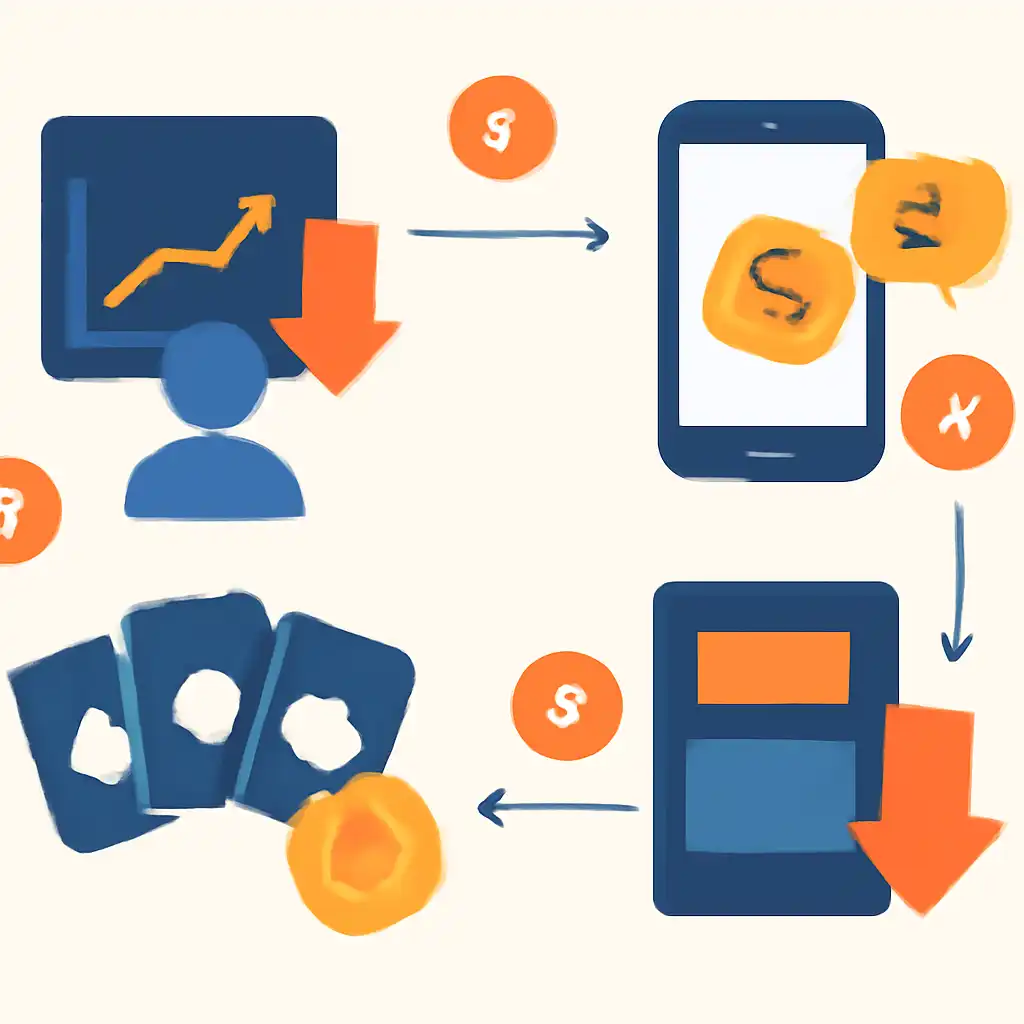
Breaking the cycle requires an intervention at Stage 1, before the compensatory bet is placed. The most reliable intervention is structural, not willpower-based: set a hard loss limit in Raja Game's responsible gambling settings so the platform itself stops the loop before emotion overrides judgment. A ₹500 session loss limit activated before you log in is worth more than any amount of in-session resolve.
Chasing Losses for New Players
New players on Raja Game are statistically the most vulnerable to chasing losses for one straightforward reason: they have not yet experienced the pattern enough times to recognise it in the moment. A player who has been through three chasing spirals has painful reference points to draw on. A first-time depositor has none. Here is what new and early-stage players need to know before funding their account for the first time.
Set a session loss limit before you log in
Decide on a fixed rupee amount you are comfortable losing entirely, treat it like the entry fee for an evening of entertainment, the same way you would budget for a movie ticket or a dinner out in your city. ₹300 to ₹500 is a reasonable starting budget for most game types on Raja Game. Once that amount is gone, the session is over. No top-ups via PhonePe, no quick ₹200 sent through BHIM "just to see one more round." Write the number down before you open the app and honour it as if it were a contract with a future, calmer version of yourself.
Never chase with your deposit bonus
Welcome bonuses and first-deposit offers on Raja Game come with wagering requirements, commonly 20× to 30× the bonus amount. If you are chasing losses using bonus balance, you are burning through those wagering requirements with negative-expected-value bets at inflated stakes. For example, a bonus with a 25× wagering requirement means you need to wager ₹25,000 before the bonus converts to withdrawable cash. Chasing at ₹500 per round burns through that requirement in 50 rounds, almost certainly at a net loss, meaning you lose real money on top of forfeiting the bonus.
Play the bonus at your normal unit size, not at chase-inflated stakes, and you give yourself a realistic path to meeting the requirement.
Start with low-volatility games
High-volatility slots and crash multipliers produce large swings that make new players feel they are "owed" a win after a cold streak. A high-variance slot might go 80 spins without a significant payout, that is normal for its mathematical design, but emotionally it reads as "the game is broken" or "I'm due." Low-volatility alternatives on Raja Game, many live dealer card games, roulette with even-money bets like red/black or odd/even, and certain table games with 98 to 99%+ RTP, give you more consistent return patterns and far fewer emotional trigger points per hour.
Start there for your first five sessions, then graduate to higher-variance formats once you have a stable feel for how your own emotions respond to cold streaks.

Keep a simple three-number session log
Open a notes app, Google Keep works well on any Android device, and record three data points per session: starting balance, ending balance, and a one-word emotional state when you stopped (calm / frustrated / relieved / chasing). After five sessions on Raja Game you will have concrete data on your own patterns, making it far harder to lie to yourself mid-session. If "frustrated" or "chasing" appears more than once in your log, that is actionable information, it tells you which game type or session length is triggering the behaviour so you can adjust before a pattern solidifies into a habit.
Understand how instant UPI deposits accelerate chasing
One factor that makes Raja Game players particularly vulnerable compared to platforms that only accept bank transfers is the frictionless availability of PhonePe, GPay, and BHIM UPI. A bank transfer top-up has a delay of hours; a UPI top-up takes under 10 seconds. That friction difference is quietly protective. If you know you tend to top up impulsively, introduce deliberate delay: put your phone face-down for 15 minutes after your balance hits zero.
In most cases the chasing urge peaks within five minutes and subsides within fifteen. The deposit you chose not to make during that window is, in most cases, money you would have lost without improving your position at all.